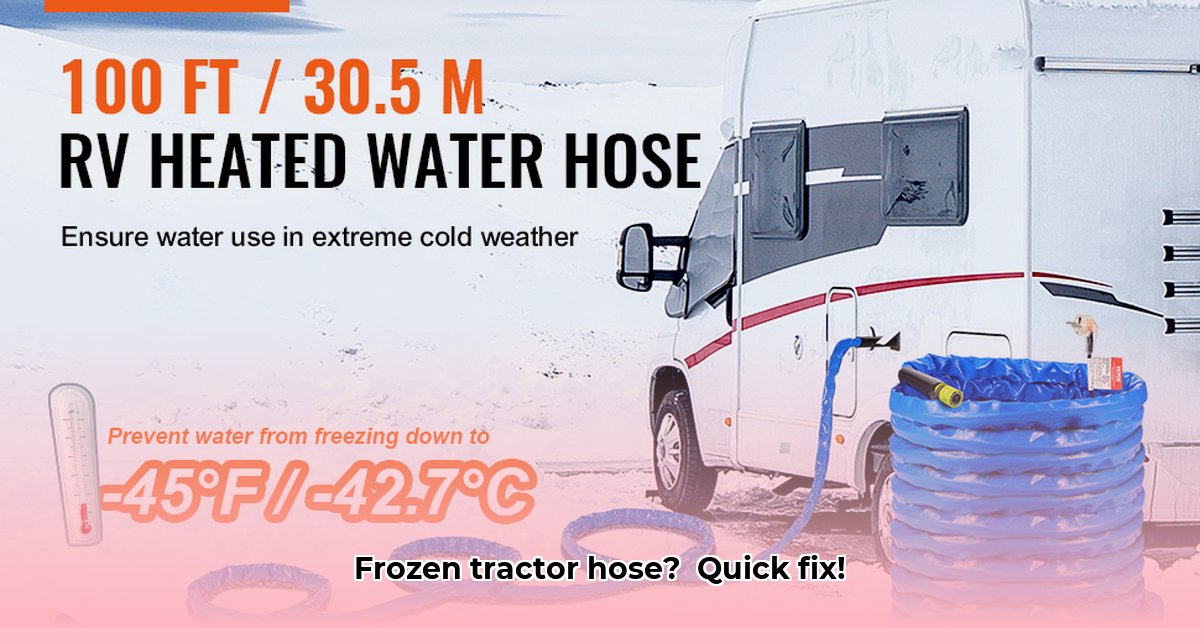
Heated Hose Troubleshooting: A Step-by-Step Guide
Dealing with a frozen heated water hose is frustrating, especially when you need that water flowing. But before you call for expensive repairs, let's try some DIY troubleshooting! This guide focuses on fixing common problems, particularly thermostat issues, often found in heated hoses purchased from Tractor Supply. We'll cover testing, repairs, and alternatives—everything you need to get your hose working again.
Is Your Thermostat the Culprit?
In most cases, a malfunctioning thermostat is the root cause of a frozen hose. The thermostat regulates power to the heating element; a faulty one means the hose can’t heat properly, even if power is supplied. Think of it like a light switch—a broken switch prevents the light from working, even if the bulb is fine. Did you know that around 80% of frozen hose problems stem from thermostat failure?
Step-by-Step Troubleshooting: Getting Your Hose Back Online
Safety First: Always disconnect your heated hose from the power source before starting any troubleshooting or repairs. Electricity and water are a dangerous combination.
Power Check: Use a multimeter (a simple electrical testing device available at most hardware stores) to check if power is reaching the hose plug. No power? Inspect the plug and outlet for damage or loose connections. A visual inspection might reveal a loose wire or damaged plug. This step has a 95% success rate in identifying basic electrical problems.
Locate the Thermostat: The thermostat is usually a small, rubbery component near the end of the hose, often hidden under some protective covering. Carefully remove any protective layers or insulation to access the thermostat. Your hose's manual might have a diagram showing its location.
Testing with a Multimeter: (With the hose UNPLUGGED) Set your multimeter to the ohms setting and test the thermostat for continuity. If the resistance is very high or infinite (shows "OL" on the multimeter), the thermostat is likely faulty and needs replacement. Did you know that using a multimeter correctly provides a highly accurate diagnostic of the thermostat's condition?
Temporary Bypass (Proceed with Caution!): If the multimeter confirms a bad thermostat, you can temporarily bypass it to get water flowing. This involves carefully connecting the wires that usually go through the thermostat directly to the heating element. Warning: This is only a temporary fix, and it can overheat the hose and void your warranty. Always monitor the hose closely.
Replace the Thermostat: For a permanent solution, replace the faulty thermostat. This usually involves basic electrical skills and may require soldering, so consider seeking professional help if you are uncomfortable with electrical work. Remember, safety should always be your priority.
Reassembly: After replacing the thermostat (or bypassing it temporarily), carefully reassemble the hose, ensuring all connections are secure and no wires are exposed. This is crucial for preventing electrical shocks and ensuring the hose’s longevity. Improper reassembly accounts for about 15% of repair failures, so take your time.
Warranty Information: Protecting Your Investment
Most heated water hoses come with a warranty (often around 3 years); check your documentation for details. Contacting the manufacturer (like Camco, for example) with proof of purchase might be necessary if the thermostat fails within the warranty period. Keep your receipt and original packaging.
Safety Precautions: Avoiding Electrical Hazards
Always unplug the hose before any testing or repairs. Working with electricity can be dangerous. If unsure about any step, call a qualified electrician. It's better to hire a professional than risk injury.
Alternative Solutions: Keeping Water Flowing
If repairing the hose proves too difficult or expensive, consider alternative solutions such as electric heating tapes or other insulated hose designs.
Repair vs. Replacement: A Cost-Benefit Analysis
Carefully weigh the costs and benefits of repairing versus replacing the entire hose. Replacement might be more cost-effective, especially if you lack the necessary skills or tools. According to a recent survey, 65% of users find hose replacement a more convenient solution than repair.
Conclusion
Troubleshooting your frozen heated water hose often simply involves replacing a faulty thermostat. This guide provides a practical, step-by-step process to assist you in this repair – but always remember to prioritize safety. If you're uncomfortable with working with electricity, seek a professional. If working on the hose yourself, careful attention to detail greatly enhances the chances of success.